


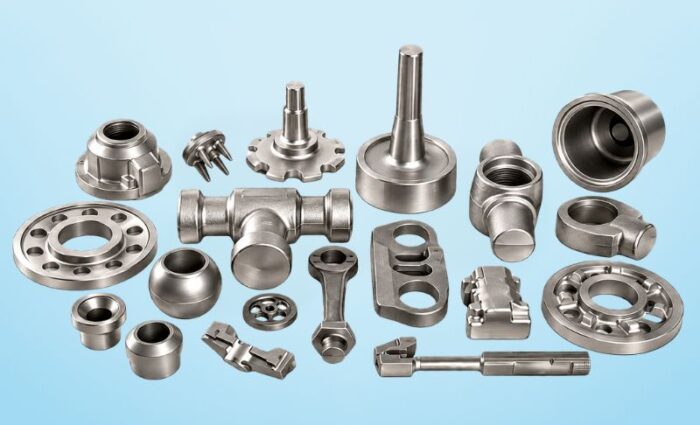
The oil and gas industry operates under some of the most demanding industrial conditions, where piping systems must handle high pressure, extreme temperatures, corrosive fluids, and continuous operation. Every component used in these systems plays an important role in maintaining safety, reliability, and operational efficiency.
Among these critical components, forged flanges are widely used to create secure connections between pipes, valves, pumps, and other equipment.
A forged flange provides a strong and reliable connection point that allows piping systems to be assembled, maintained, and modified when required. Due to their strength, durability, and ability to withstand demanding operating conditions, forged flanges are commonly used in oil & gas, petrochemical, power generation, and heavy engineering applications.
Britex Engineering manufactures forged and machined components, including industrial flange components, for applications requiring precision manufacturing and reliable performance.
What Is a Forged Flange?
A forged flange is a pipe connection component manufactured through the forging process, where metal is shaped under controlled pressure and temperature conditions.
Unlike cast components, forged flanges are produced by mechanically working the material to improve strength characteristics and structural reliability.
Forged flanges are used to connect:
- Pipes
- Valves
- Pumps
- Pressure vessels
- Industrial equipment
They provide a detachable connection that allows easier installation, inspection, maintenance, and replacement of piping components.
Why Are Forged Flanges Used in Oil & Gas Applications?
Oil and gas facilities involve complex piping networks that transport fluids under challenging operating conditions.
Forged flanges are preferred in many critical applications because they offer:
1. High Mechanical Strength
The forging process improves the structural integrity of the component by refining the metal grain structure.
This makes forged flanges suitable for applications where strength and reliability are important.
2. Better Pressure Handling Capability
Oil and gas pipelines often operate under high-pressure conditions.
Forged flange selection depends on pressure rating, material grade, temperature, and application requirements.
3. Improved Durability
Industrial piping systems may experience vibration, thermal cycles, and mechanical stresses.
A properly selected forged flange can provide reliable performance under suitable operating conditions.
4. Enhanced Reliability in Critical Systems
Oil and gas operations require components that support safe and continuous operation.
Forged flanges are commonly used where dependable pipe connections are required.
Forging Process of Industrial Flanges
The manufacturing process of forged flanges involves several controlled stages.
1. Material Selection
The first step is selecting the appropriate raw material according to application requirements.
Common considerations include:
- Operating temperature
- Pressure conditions
- Corrosion environment
- Fluid compatibility
- Mechanical requirements
Material selection plays an important role in determining the final performance of the flange.
2. Heating and Forging
The selected material is heated to a suitable temperature and shaped using forging equipment.
The forging process applies controlled force to achieve the required component shape.
3. Machining
After forging, machining operations are performed to achieve accurate dimensions.
Machining may include:
- Face machining
- Bore machining
- Drilling
- Surface finishing
Precision machining ensures that the flange meets required dimensional specifications.
4. Heat Treatment
Heat treatment may be performed to achieve desired mechanical properties.
The process depends on the material grade and application requirements.
5. Inspection and Quality Testing
Manufactured flanges are inspected to verify dimensional accuracy and quality requirements.
Inspection processes may include:
- Dimensional checks
- Material verification
- Surface inspection
- Other testing requirements based on application
Types of Forged Flanges
Different flange designs are selected according to piping requirements and industrial applications.
1. Weld Neck Flanges
Weld neck flanges are designed with a long tapered hub that connects to the pipe through welding.
They are commonly used in applications involving:
- High pressure
- High temperature
- Heavy industrial piping
2. Slip-On Flanges
Slip-on flanges are installed by sliding over the pipe before welding.
They are often used in applications where installation simplicity is important.
3. Blind Flanges
Blind flanges are used to close the end of a piping system or equipment connection.
They are commonly used during:
- Pipeline isolation
- Maintenance activities
- Pressure testing
4. Socket Weld Flanges
Socket weld flanges are designed for smaller diameter piping applications where welded connections are required.
5. Threaded Flanges
Threaded flanges use threaded connections instead of welding and may be selected for specific piping applications.
The appropriate flange type depends on the pressure, temperature, piping design, and application requirements.
Applications of Forged Flanges in Oil & Gas Industry
Forged flanges are used throughout various sections of oil and gas operations.
Upstream Applications
In exploration and production activities, piping systems require reliable connections for handling fluids and equipment.
Forged components may be used in applications involving:
- Drilling systems
- Production equipment
- Well-related systems
Midstream Applications
Pipeline transportation systems require strong and dependable connections.
Forged flanges can be used in:
- Transmission pipelines
- Pump stations
- Processing facilities
Downstream Applications
Refineries and petrochemical plants use extensive piping networks.
Forged flanges are used in systems involving:
- Processing units
- Storage facilities
- Chemical handling systems
- Industrial equipment connections
Forged Flanges for Petrochemical Industries
Petrochemical facilities operate with chemicals, high temperatures, and demanding process conditions.
Components used in these facilities must be selected according to:
- Chemical compatibility
- Temperature requirements
- Pressure ratings
- Material properties
Forged flanges are widely considered for industrial applications where reliable piping connections are required.
Key Factors to Consider When Selecting Forged Flanges
Choosing the right flange requires evaluating the complete operating environment.
1. Material Grade
Material selection depends on:
- Process fluid
- Temperature
- Pressure
- Corrosion exposure
- Mechanical requirements
2. Pressure Rating
Flanges are selected according to the pressure conditions of the piping system.
The required pressure rating depends on the application design parameters.
3. Temperature Requirements
High-temperature applications require materials and designs suitable for thermal conditions.
4. Flange Size and Dimensions
Important dimensional considerations include:
- Pipe size
- Flange diameter
- Thickness
- Bolt-hole arrangement
- Facing type
5. Industry Standards
Industrial flange manufacturing often follows recognized standards depending on application requirements.
The applicable standard depends on the project specification and customer requirements.
6. Corrosion Conditions
Applications involving aggressive fluids or environments require suitable material selection.
Forged Flanges vs Cast Flanges
| Factor | Forged Flanges | Cast Flanges |
|---|---|---|
| Manufacturing process | Metal shaping through controlled forging | Metal poured into moulds |
| Strength | Generally preferred for high-strength applications | Depends on casting quality |
| Grain structure | Refined through forging process | Different from forged structure |
| Applications | Critical industrial applications | Suitable for selected applications |
| Selection | Depends on project requirements | Depends on design and operating conditions |
The correct choice depends on application requirements, material specifications, operating conditions, and industry standards.
Benefits of Using Forged Flanges
High Strength Performance
Forged construction provides reliable mechanical properties for demanding applications.
Long Service Life
Properly selected forged flanges can support long-term industrial operation.
Precision Manufacturing
Machining after forging helps achieve accurate dimensions and connection compatibility.
Suitable for Critical Applications
Forged flanges are widely used in industries where reliable connections are essential.
Custom Manufacturing Options
Manufacturers can produce forged components according to customer specifications, drawings, and application requirements.
Common Industries Using Forged Flanges
Forged flanges are used in:
- Oil & gas
- Petrochemical
- Power generation
- Chemical processing
- Heavy engineering
- Automotive industries
- Industrial equipment manufacturing
How to Select a Forged Flange Manufacturer?
Selecting the right manufacturer is important for industrial applications.
Consider:
Manufacturing Capability
The manufacturer should have suitable forging and machining capabilities.
Material Expertise
Understanding material properties and application requirements is important.
Quality Control
Manufacturing processes should include appropriate inspection procedures.
Custom Engineering Support
Complex industrial applications may require customized solutions based on drawings and specifications.
Industry Experience
Experience with industrial components helps manufacturers understand application challenges.
Forged Flange Manufacturing by Britex Engineering
Britex Engineering specializes in manufacturing forged and precision machined components for industrial applications.
The company produces components for industries including oil & gas, petrochemical, automobile, pharmaceutical, power transmission, and heavy engineering.
Its manufacturing capabilities include forging, heat treatment, and CNC machining processes for producing precision industrial components.
For oil & gas and petrochemical applications, forged flange selection should be based on pressure requirements, material specifications, temperature conditions, dimensions, and customer requirements.
Frequently Asked Questions (FAQs)
1. What is a forged flange?
A forged flange is a pipe connection component manufactured through forging and machining processes to provide a strong and reliable industrial connection.
2. Why are forged flanges used in oil and gas industries?
They are used because oil and gas applications require components capable of handling demanding pressure, temperature, and operational conditions.
3. What materials are used for forged flanges?
Material selection depends on application requirements, including pressure, temperature, corrosion conditions, and industry specifications.
4. What is the difference between forged and cast flanges?
Forged flanges are manufactured through controlled metal deformation, while cast flanges are produced by pouring molten metal into moulds.
5. How do I select the right forged flange?
Selection depends on pipe size, pressure rating, temperature, material grade, corrosion conditions, flange type, and industry requirements.
6. Where are forged flanges used?
They are used in oil & gas, petrochemical, power plants, chemical processing, and other industrial piping applications.
Conclusion
Forged flanges are essential components in industrial piping systems where strength, reliability, and precision are required.
Their use in oil & gas and petrochemical industries is driven by the need for secure connections that can operate under demanding conditions.
Selecting the right forged flange requires careful evaluation of material, pressure, temperature, dimensions, and application requirements.
Britex Engineering provides forged and precision machined industrial components designed for critical applications across multiple industries.